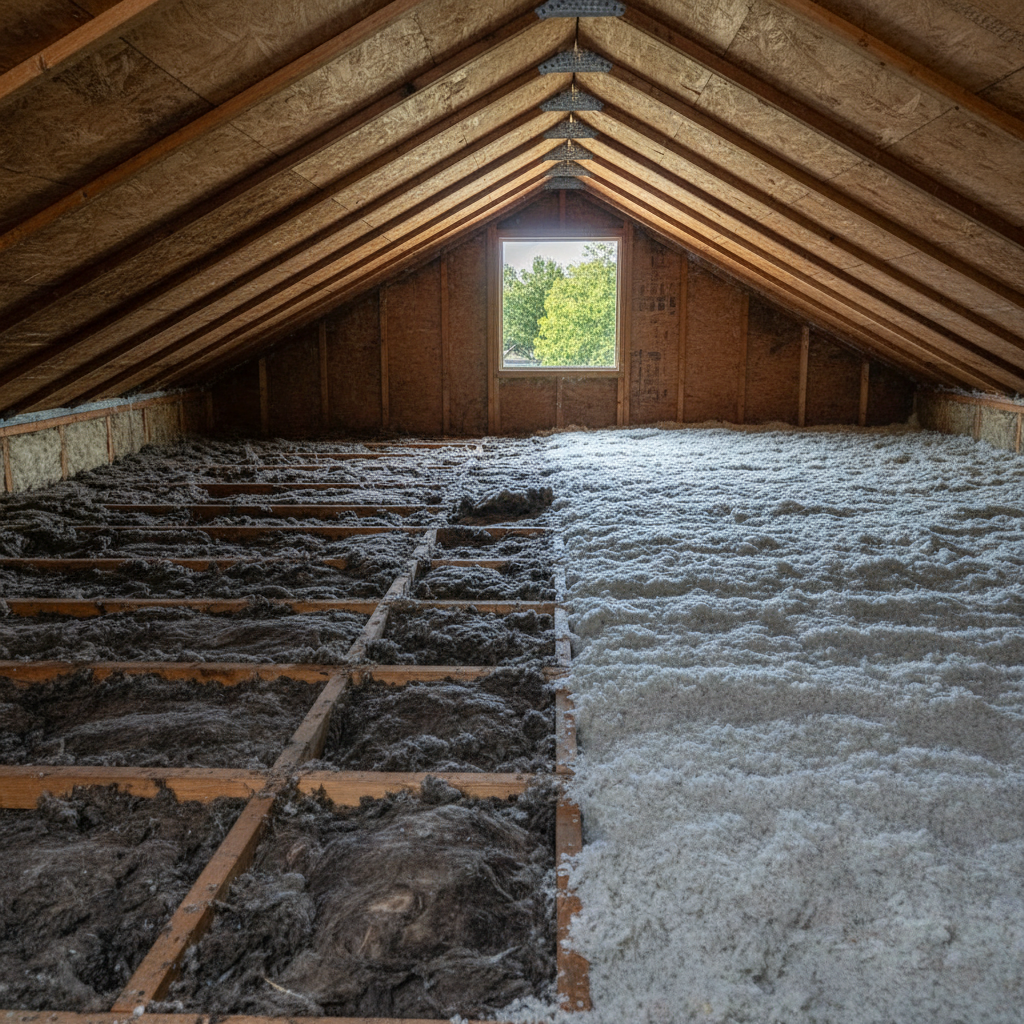
Alright, let's talk attics. If you're like most folks in Irving, you've probably thought about your insulation at some point, especially when that electric bill hits or when it feels like your AC is running non-stop. Two of the most common options for attic insulation are blown-in (usually cellulose or fiberglass) and spray foam. Which one's right for your home? Let's get into it.
Blown-In Insulation: The Traditional Choice
Blown-in insulation has been around forever, and for good reason. It's typically made of cellulose (recycled paper products, treated for fire resistance) or loose-fill fiberglass. It's installed by blowing the material into your attic space, creating a thick, fluffy blanket over your ceiling joists.
- Cost: This is where blown-in usually wins upfront. It's generally less expensive to install per square foot than spray foam. If budget is your absolute top priority and you're looking for a quick R-value boost, it's a solid contender.
- Installation: It's a pretty straightforward process. A hose is run into your attic, and the material is blown in. It can be a bit dusty during installation, but it's usually done fairly quickly.
- R-Value: Blown-in insulation offers good R-values (a measure of thermal resistance). You can achieve high R-values by simply blowing in more material.
- Appearance: It's a loose, fluffy material. Not exactly pretty, but it's in your attic, so who's really looking?
- Maintenance: Generally low maintenance. Just make sure it stays dry and undisturbed.
Now, here's where it gets tricky in Texas. Blown-in insulation works by trapping air. That's great for slowing heat transfer. But it doesn't create an airtight seal. We've got some serious air leakage in a lot of older homes around the Hospital District or even some of the newer builds in Las Colinas. Air can still move through and around blown-in insulation, especially if there are gaps, penetrations for wires, or recessed lights. And if it gets wet from a roof leak, it can compact, lose R-value, and even encourage mold growth.
Spray Foam Insulation: The Modern Solution
Spray foam is a different beast entirely. It's a liquid chemical mixture that's sprayed onto surfaces, where it expands and hardens into a dense, rigid foam. There are two main types: open-cell (softer, less dense) and closed-cell (denser, more rigid).
- Cost: Let's be honest, spray foam is more expensive upfront. There's no way around that. But you're paying for a lot more than just R-value.
- Installation: This requires specialized equipment and trained professionals. It expands quickly, filling every nook and cranny.
- R-Value: Spray foam offers excellent R-values per inch, often higher than blown-in. But its real superpower isn't just the R-value.
- Appearance: It looks like, well, foam. It can be trimmed flat or left with its natural expanded texture. Again, it's in your attic.
- Maintenance: Once it's in, it's pretty much maintenance-free. It won't settle, shift, or degrade over time. It also acts as a barrier against pests.
The biggest advantage of spray foam, especially for us here in Irving, is its ability to create an air seal. It adheres directly to your roof deck or attic floor, sealing off all those tiny gaps and cracks where air leaks in and out. This means less hot, humid air from outside getting into your attic, and less conditioned air escaping from your home. It's not just insulating; it's air sealing. That's a huge deal when you're battling 100-degree summers and high humidity.
My Recommendation for Irving Homeowners
Look, if you're on a super tight budget and just need a little boost, blown-in insulation is better than nothing. It will definitely improve your home's energy efficiency to some extent. But if you're looking for the best long-term solution, the most comfortable home, and the biggest impact on your energy bills, spray foam insulation is the clear winner for Irving, TX homes.
Why? Because of the air seal. Our climate demands it. It keeps your attic cooler in the summer, which means your AC works less hard. It helps prevent moisture issues. It creates a much more consistent temperature throughout your home. Yes, the initial investment is higher, but the energy savings over the life of your home, plus the added comfort, usually make it well worth it.
Think of it this way: blown-in is like wearing a good sweater. Spray foam is like wearing a good sweater AND a windproof jacket. In Texas, you need that jacket. If you're considering an upgrade or new insulation, give Irving Spray Foam Insulation a call. We can walk you through the options and see what makes the most sense for your specific home and goals.